A buyer scrolling Telegram at eleven at night does not watch a dealership ad. They watch three seconds of it, decide whether the car in the frame is the car they can afford, and keep scrolling. That is the entire contest. Most dealership video loses it before the second cut — not because the production is cheap, but because the film answers a question nobody asked. It shows a smiling salesperson and a logo while the buyer is trying to work out the trim level, the wheel size, and whether the price in the caption is real.
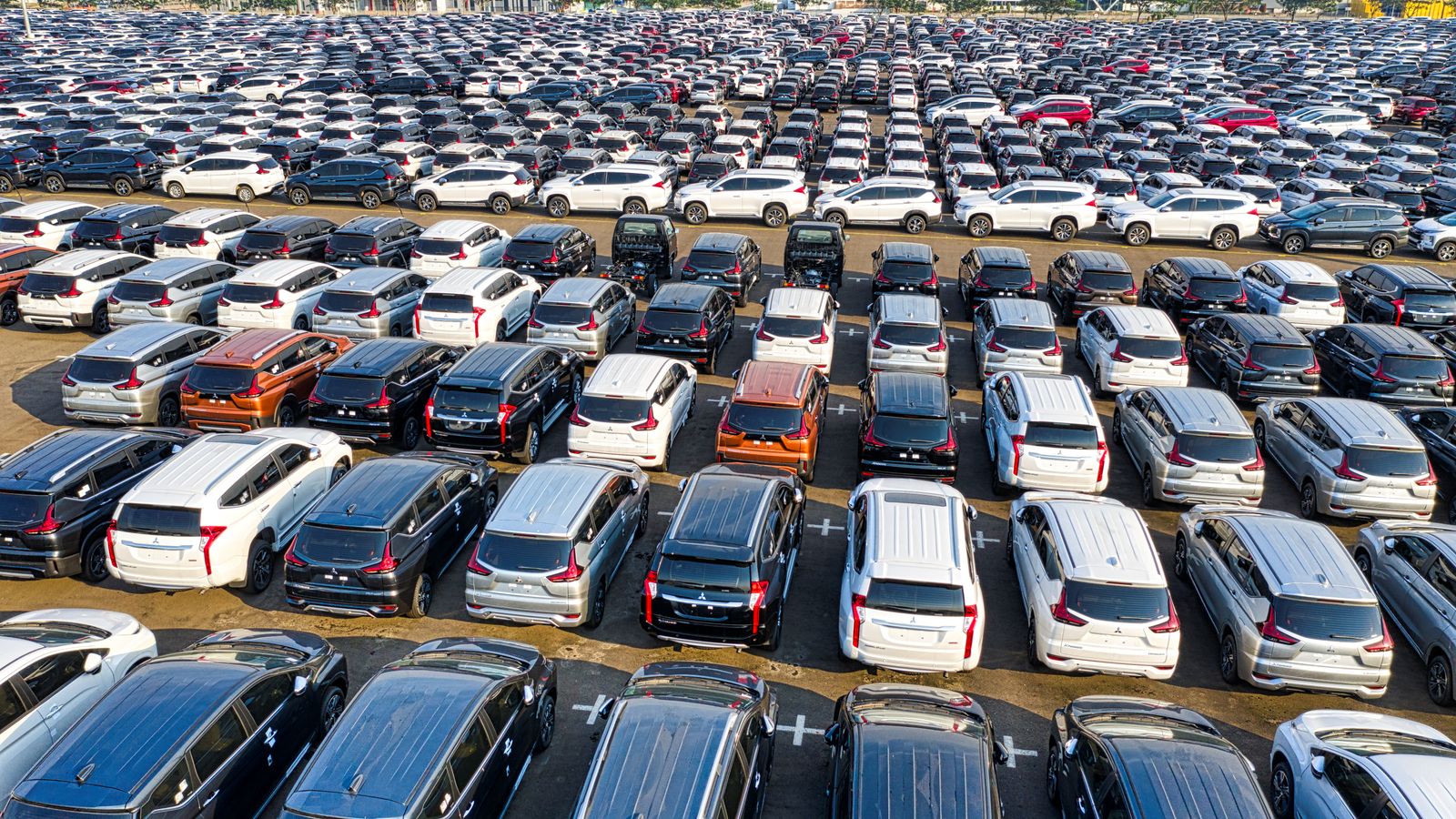
This piece is about the dealership and importer problem specifically: the inventory-driven business where you sell forty different cars a month and cannot shoot a hero film for every one of them. Having produced this kind of work from Tashkent for dealers selling locally and exporting across the region, here is the honest split between what generation does well and where it quietly produces a car that no longer matches the listing.
The listing layer and the campaign layer are two different jobs
The mistake almost every dealer makes first is asking one video to do both. A listing has one obligation: represent the exact vehicle, with its exact mileage, its exact scratches and its exact wheels, because the buyer will stand next to it on Saturday and compare. Generation cannot do that honestly. A generated car is a plausible car, not this car.
A campaign has the opposite job. It sells the category, the finance offer, the trade-in programme, the arrival of a new shipment, the showroom itself. Nobody walks in expecting the car in the campaign to be the specific unit in bay four. That is where AI video earns its money, because the same thirty-second film can be produced in Uzbek, Russian and English, in three aspect ratios, with the price and the offer changed per city, for roughly the cost of one filmed shoot.
So the rule we give dealers is blunt: photograph the unit, generate the campaign. If a film has to prove something about one specific car, it is not a generation job.
The shot list that survives a three-second scroll
Car commercials are a solved grammar. Nine shots carry almost all of it, and each one exists to answer a specific doubt rather than to look expensive.
Open on a low three-quarter front angle at dusk, roughly thirty centimetres off the ground. That angle communicates stance and width in a single frame and is the most persuasive view of any vehicle. Then a slow move across the front wheel and arch, because wheel size is the fastest proxy for trim level and buyers read it instantly. Then the headlight signature switching on, which is the closest thing a car has to a face. Then an interior view through the open driver's door, framed so the screen and the gear selector are both legible. Then the tailgate or boot opening, which answers the family question without a word of copy. Then one rolling shot. Then a detail of the key or the door handle. Then a static end card with the price, the offer and the dealership name in the local script.
Nine shots, twenty-six to thirty-four seconds. That length is not arbitrary. It is long enough to hold an offer and short enough to survive a feed.
One shot in that list deserves its own explanation, because it is where most automotive generation fails. Everything that makes a car look real in motion is a physics problem. Wheels must rotate at a rate that matches the apparent speed of the ground, or the car reads as sliding. Reflections in paint and glass must travel across the bodywork at the right speed relative to the camera, and they must not bend in ways that reveal a generated surface. Suspension has to absorb something. Background parallax has to be consistent with a camera that is genuinely tracking.
In practice we solve this by shooting a real plate — a two-minute locked-off drive down a quiet street at the right hour — and compositing the generated car into it, rather than asking a model to invent both the car and the world. It costs a small amount of real footage and a day of compositing, and it removes the most common tell in automotive generation.
Getting the car itself right
A dealership audience is unforgiving because they look at cars all day. Four things break the illusion fastest: proportion, badges, wheels and lamps.
Proportion means wheelbase relative to overhang, ride height, and windscreen rake. A car ten percent too tall reads as a different model. Badges are a legal and a credibility problem at once, so our rule is that we never invent one: either there is a clean authorised reference, or the frame is composed so the badge is not the subject. Wheels must match the trim being advertised, because a buyer who orders the mid trim and receives steel wheels with covers will remember the video. Lamps matter more than most dealers expect — the daytime running light shape, the tail light pattern, and whether the indicators are dynamic or static.
These are also the details that differ between Korean, Chinese, Gulf and European spec of the same model, which is exactly the problem an importer faces when one shipment arrives from three sources. The practical fix is a reference set: twelve to twenty photographs of the actual car, one per angle, with the wheelbase measured and written down. That is forty minutes for one staff member with a phone and a tape measure, and it is the difference between a car that holds up on a showroom screen and one that does not.
Language, offer and aspect ratio, multiplied
The value here is arithmetic. One master timeline becomes Uzbek and Russian voice and captions, plus an English cut for export buyers. Each language carries its own price card, its own finance wording and its own call to action, which means the Uzbek cut can state the price in so'm while the Russian cut leads with a trade-in valuation, because those are different arguments to different buyers.
Aspect ratio follows the same logic. Vertical nine by sixteen for Instagram, Telegram and TikTok; horizontal sixteen by nine for YouTube, the showroom screen and the website header; square if the media plan includes it. Delivering all three from one generation session costs marginally more than delivering one, and almost nothing next to shooting twice.
Turnaround, revisions and where the budget goes
A three-variant campaign — two models, three languages, three ratios — runs five to eight working days from an approved reference set to delivery. The schedule is dominated by two things: the reference set and the review rounds. Revisions are cheap when they concern timing, music or a caption, and expensive when they concern the car itself, because changing the car means regenerating plates and re-compositing rather than editing.
That is why we ask for sign-off on the car reference and the board before a frame is generated. A dealer who approves the board on Monday and the car on Tuesday gets a film with no structural revisions. A dealer who changes the model after the first assembly pays for the sequence twice.
How to review the draft in ninety seconds
Watch it once with the sound off. If the offer is not clear with the sound off, the film is not finished. Then check six things: are the proportions right, is the badge correct or absent, is the number plate plausible for the market, do reflections travel correctly, do the wheels rotate in the right direction at a rate that matches the ground, and does the tail light logic hold when the car brakes. Those six checks catch nearly every failure we see in automotive generation, and none of them needs technical knowledge — only someone who looks at cars all day, which every dealership already employs.
If you are a dealer or an importer sitting on inventory and a media budget that cannot stretch to a filmed shoot per model, send us one reference set and the offer you are running this month. We will return a shot list and a fixed quote before any generation starts.