Fashion is the category where generated footage is most likely to embarrass a brand, and the failure is rarely the face. It is the cloth.
A linen shirt that reads as thin cotton. A silk dress that moves like a shower curtain in a draught. A print that reorganises itself between two shots of the same garment. A hem that sits three centimetres higher in the close-up than in the wide. None of this shows in a still frame. All of it shows the moment the clip plays, and anyone who works in the trade spots it in under three seconds.
That gap between a convincing frame and believable motion is the whole job in fashion video. It is also why fashion work is quoted higher per finished second than restaurants or real estate: the tolerances are tighter, and a shot that would pass in another category gets rejected here for the way a sleeve falls.
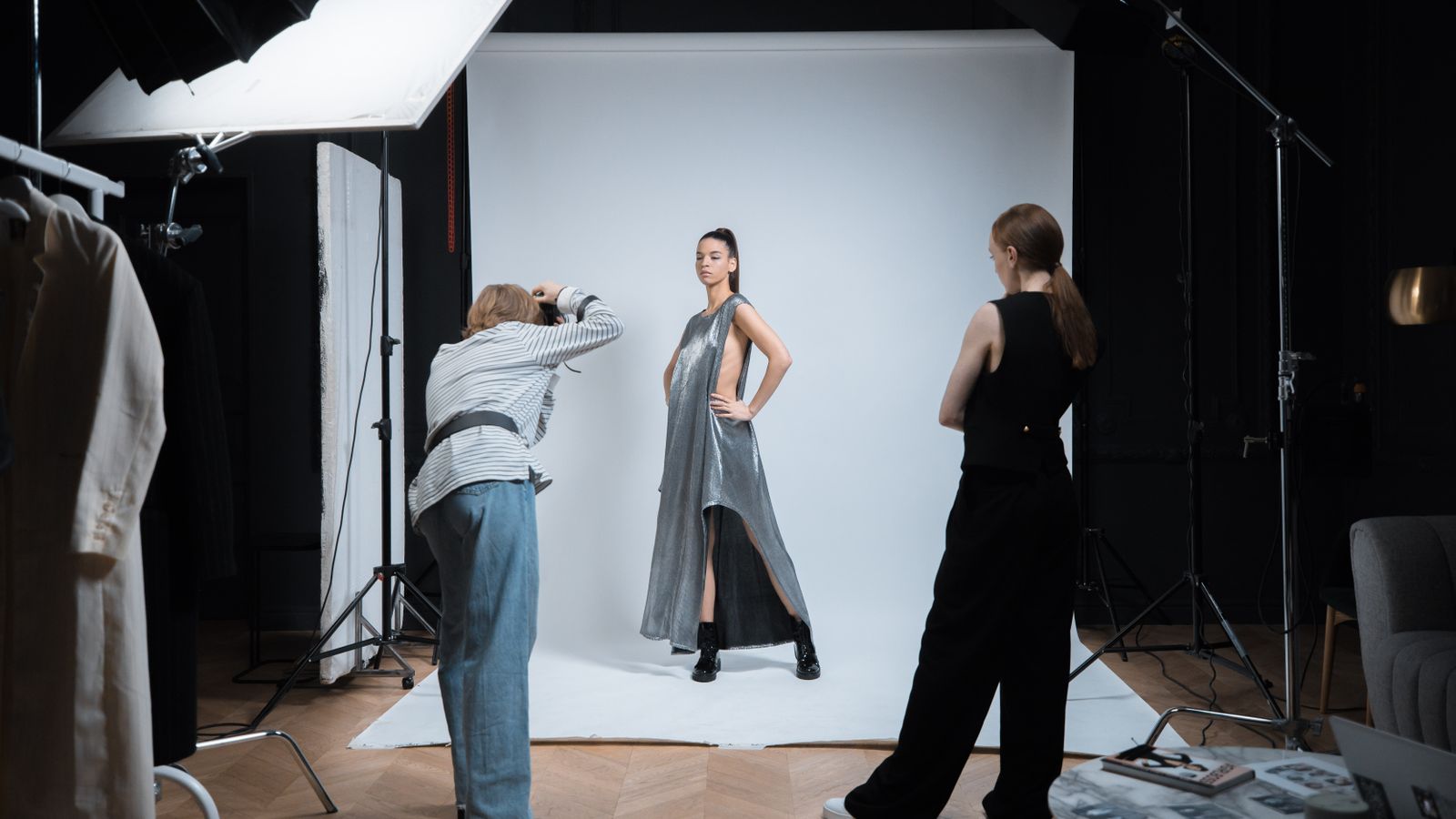
The garment is the subject, not the model
Most fashion briefs arrive as moodboards of faces. That is the wrong starting point. The buyer is not purchasing a face; they are buying how a jacket breaks at the shoulder and whether a trouser holds its line when the model walks.
Before any motion is generated, fix the garment facts in writing: fibre and weight, how the surface reflects light (matte wool, satin, coated nylon, sequins), the real colour reference from a physical swatch photographed in daylight rather than a screenshot of a product page, seam and stitch detail on anything shown close, hardware, and the finished length in centimetres.
Then decide which of those facts the camera will ever be close enough to verify. A four-second shot at medium distance cannot prove stitch quality and should not try. A two-second macro of a cuff can, and if the render is not accurate there it becomes a defect instead of a detail.
Cast once, lock the reference
A fashion film usually needs the same model in eight to twelve shots across several looks. Consistency is not one good still repeated; it is a face and a body that survive a turn, a walk and a change of light.
The method that works: generate forty to sixty candidate stills from a single casting description, keep the three that hold up at full resolution, then build a reference sheet from them - front, three-quarter, profile, full body and one frame in motion. Every later shot uses that sheet plus a locked seed and the same lens description. Faces drift when the prompt is reworded between shots, so the prompt becomes a fixed document where only the wardrobe and action fields are allowed to change.
Two practical limits. A model built for stills and a model built for motion are rarely the same asset, so expect one re-cast after the first walk cycle is tested. And hands and jewellery remain the weak point: if the look involves rings, long nails, thin straps or a held bag, budget for retouching or shoot those moments practically.
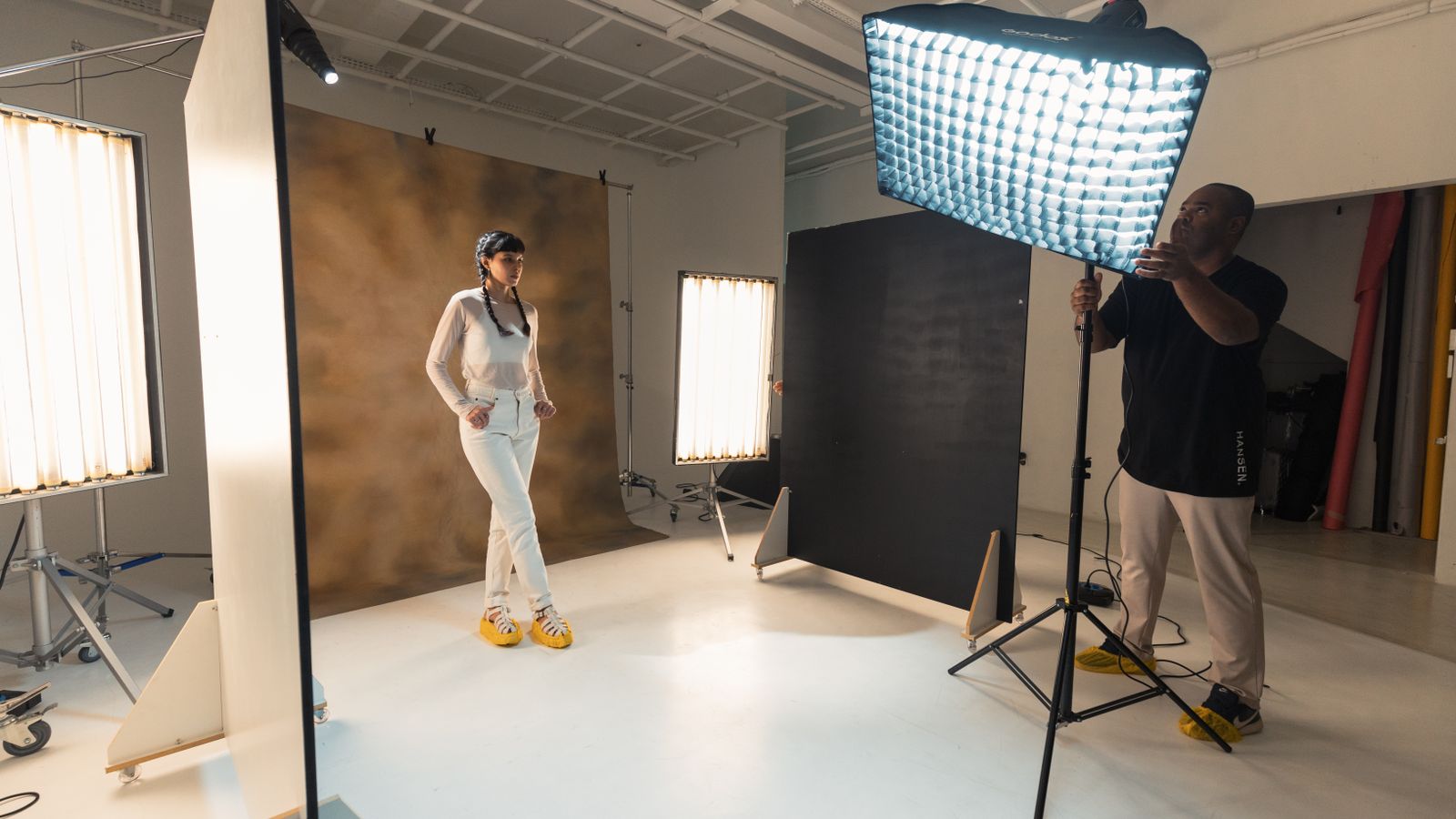
Fabric behaviour: what gives a fake away
Four things separate cloth that reads as cloth from cloth that reads as rubber.
Drape. Gravity has to be visible in the folds. A heavy wool coat hangs in long vertical breaks; a chiffon skirt collapses into fine irregular pleats. Generated motion tends to make everything behave like medium-weight cotton, because that is the most common fabric in the training data.
Inertia. Fabric lags the body. When a model turns, the hem arrives a fraction of a second late and overshoots before it settles. If the garment moves in perfect sync with the shoulders, the shot reads as a render even when the lighting is flawless.
Tension. A fitted waistband pulls; a loose sleeve bunches at the elbow. Real garments show where they are being asked to do work, and that visible strain is a large part of what makes a photograph feel like a person wearing clothes.
Interaction with air. Wind needs a direction and a source. A fan off-frame at chest height produces a different result from air from below, and writing the direction into the shot notes is the difference between a dress that flows and a dress that looks underwater.
We test all four on a three-second clip before committing to a sequence. It costs a few minutes and saves whole days of regeneration.
A shot list a fashion film actually needs
Twelve shots is enough for a ninety-second lookbook film with cutdowns. A structure that survives editing:
- One establishing frame of the set, no model, four seconds, for titles and captions
- Full-body walk towards camera, two angles, three seconds each
- Three-quarter turn, one second, repeated once per look
- Detail pass: cuff, hem, closure, hardware, one second each
- Two close portraits with the garment visible at the frame edge
- One full-body hold per look, two seconds, for text overlay
Keep individual shots between one and three seconds. Clips that run longer accumulate small physical errors - a strap sliding, a hem losing shape - and audiences read those errors as cheapness. Short shots also make the edit forgiving when one angle fails.
Colour, skin tone and the dye lot
Fashion buyers compare a video against a physical sample, and that comparison is unforgiving on two things: the exact hue of the fabric and the skin tone of the model.
Ask for a colour reference shot under neutral daylight, not a screenshot. Then check the pipeline once, at the start: render a single frame of the garment, sample the pixel values and compare against the swatch. If the shift is more than a few points of saturation, correct it in the grade rather than by re-prompting, because re-prompting changes the texture of the fabric as well as its colour.
Skin is the other trap. Generated faces default to a warm, slightly orange grade that looks fine on a phone and wrong next to a printed campaign. Lock a viewing standard early - one calibrated monitor and one reference frame both sides agree on - and grade all deliverables together at the end. Sequences graded separately drift, and the drift is obvious when two of them sit next to each other on a product page.
Where a camera still wins, and the cutdown trap
Generated footage handles movement through space well: walking, turning, a garment in wind, a set that does not exist. It stays weaker at three things - precise garment construction in close-up, hands interacting with product, and any shot where the customer needs to verify fit. For those, plan a short practical shoot and use AI for everything around it. A hybrid is not a compromise; it is usually cheaper than regenerating a close-up nine times.
On delivery, assume the film will be cut before it is approved. Produce one master at the widest ratio, then cut 9:16, 4:5 and 1:1 from the same source rather than generating per platform. Keep the subject inside a safe central area at every ratio, because a full-body walk framed for 16:9 loses the shoes at 9:16. Deliver at a frame rate the platform will not recompress badly: 25 or 30 frames per second for social, 24 for anything meant to feel cinematic.
Then hold a buffer before the campaign date. Not because generation is slow, but because the moment a buyer sees the film they will want one more look, one more colourway, and a version with the price card.
If you are planning a fashion film for a launch, a marketplace listing or a seasonal lookbook, send the garment facts and the shot list you have in mind. We will tell you which shots are safe to generate, which need a camera, and where the budget actually goes. KAMOD is an AI video studio in Tashkent working with brands worldwide.