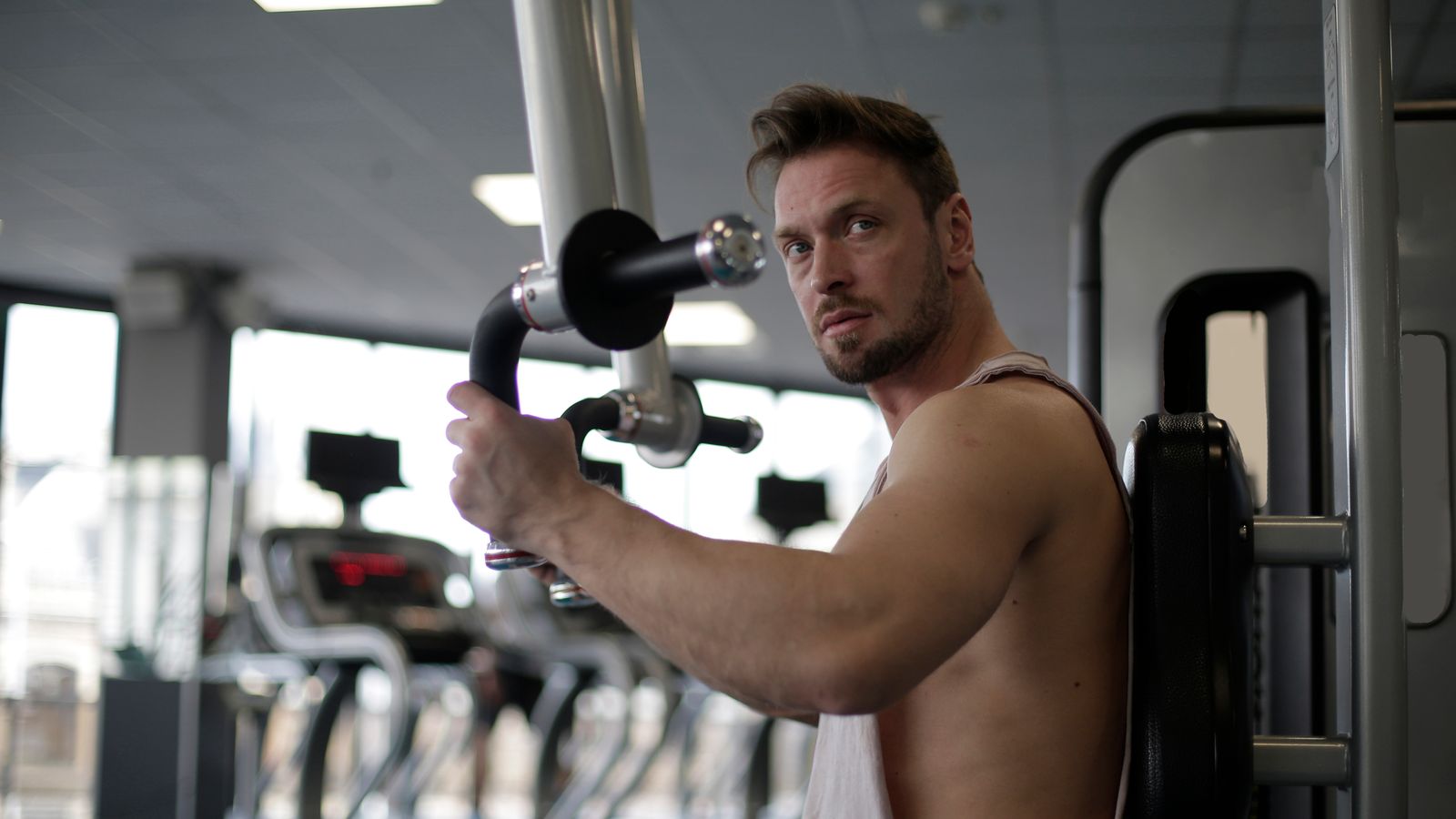
A gym chain in Tashkent opened a second location and booked a launch campaign: one hero film, nine vertical cutdowns, and a set of stills for the app. The first AI draft arrived in two days and the framing was genuinely good. Then we watched it at full speed. The barbell bowed around the plates under load. A runner's feet slid across the treadmill belt without ever catching. A hand closed on a dumbbell handle and the fingers sank into the metal. And the sweat, which the brief had asked for twice, sat on the skin as small transparent beads.
None of that was a creative failure. All of it was a physics failure, and physics is the specific tax that fitness video pays when it is made with generative tools. Sport is the category that punishes this hardest, because the audience for a gym campaign trains five times a week. They know how a loaded bar flexes. They know what a body does in the last two seconds of a set.
This is the production plan we use for fitness, sport and supplement work, with the shot rules and the numbers we actually work to.
Fast motion is where generation fails first
A generator does not simulate weight. It predicts the next frame from what it has seen, and fast human movement under load is one of the least predictable things in a frame. Three failures show up again and again: limbs that move at a constant speed instead of accelerating and decelerating, contact points that do not stick (feet on a belt, hands on a bar, a rope in a grip), and equipment that deforms under imaginary force.
What we do about it:
- Nothing heavy moves fast in a hero frame. A deadlift is shot at the moment of lockout, not at the pull. A sprint is shot at the start or after the finish line, not mid-stride.
- Where speed is the point, we generate the plate and cut the motion in the edit. A 12-frame speed ramp over a generated still reads as speed; a generated sprint reads as a video game.
- Contact shots are built from real plates. A hand gripping a handle, a foot planting on a platform, a rope being pulled — these come from a photographed element with generated light and environment around it.
- Crowd and stadium shots stay wide and short. Wide frames hide limb detail; two seconds hides the rest.
The realistic hit rate on a fitness batch is lower than in most categories we work in: of every ten generated action shots, expect six usable, two to regenerate, and two that need a practical or composited replacement. A studio quoting ten out of ten has not shot a loaded barbell yet.
Sweat, skin and the physics of effort
Sweat is the single most requested and most reliably wrong element in this category. Real sweat is not beads. It is a sheen that follows the shape of a muscle, it darkens fabric in patches, and it collects where skin folds. Generated sweat tends to be uniform, too bright, and evenly distributed, which reads instantly as cosmetic.
The rules we apply:
- Ask for sheen, not droplets. A wet shoulder under a hard side light is easy to generate and hard to get wrong. Droplets on a forehead are not.
- Keep faces 2 to 3 seconds in close frames. Skin holds up at short duration and degrades when held, which is the same rule we use on beauty work.
- Do not generate the moment of maximum effort on a face. The grimace at the end of a set is where expression, teeth and jaw tension all fail together. Cut before it, or use a real plate.
- Fabric is a separate budget line. Compression wear stretches, mesh darkens, and a shirt that does not move with a ribcage reads as a costume. Either shoot the wardrobe element or keep it out of the tight frames.
If the campaign is really about the body — a transformation story, a physique brand — a short real shoot of one athlete is cheaper than the review rounds it takes to generate credible skin at that scale. We say this before quoting, not after.
Equipment and grip: the shots that fail first
Fitness is a category full of hard objects that a viewer knows by feel: knurling on a bar, the seam on a medicine ball, the shape of a cable stack, the way a plate sits on a sleeve. Generators approximate these, and approximation is visible to anyone who touches them daily.
Our shot list treats equipment in three tiers. Tier one is hero equipment where the brand or the machine must be legible — a specific treadmill, a branded rack, a supplement tub on a bench. Those are always real plates, with AI used for motion, light and environment. Tier two is generic weight: plates, dumbbells, kettlebells. Those can be generated if the shot is wide or short, and they get inspected frame by frame if they are neither. Tier three is background clutter, which can be generated freely.
Hands are the recurring problem. A grip is a precise mechanical event, and generators still fold fingers, merge a thumb into a handle, or lose the knuckle line. Three practical workarounds:
1. Keep the working hand partly occluded — behind a plate, inside a strap, wrapped in tape. 2. Shoot grip from an angle where the hand is smaller in frame than the equipment. 3. For anything where the grip is the story, use a real hand and generate around it. This is one of the few cases where a phone-shot plate is the correct production choice.
Lighting a gym you do not control
Real gyms are lit for atmosphere, not for cameras: coloured practicals, mirror walls, overhead downlights that put a hard pool on the floor and leave faces in shadow. That look is part of why fitness footage works, and it is also the hardest lighting to reproduce consistently across forty generations.
We rebuild the light rather than copy the room. A locked lighting document names the key direction, the colour temperature of the practicals, the ratio between fill and key, and the amount of haze in the air. Every shot in the batch references that document, and all shots that share a setup are generated together, not in story order.
Two trade-offs are worth naming. First, aggressive colour in a gym is a continuity risk: a magenta practical in shot four and an orange one in shot nine will not feel like the same room, even if both look good alone. Second, haze reads as production value in stills and as fog in motion if it is overdone. We keep haze low and lift it in the grade instead.
Transformation claims, supplements and market rules
This is where fitness work carries legal risk that most video categories do not.
Before-and-after frames are the obvious one. In many markets a before-and-after that implies a permanent result needs substantiation the brand may not hold, and a generated one adds a second problem: the result must reflect a real effect of a real product, not a render. We do not generate the after frame. If the brand has consented customer material, we composite and grade from it, and the brand confirms in writing that the claim is theirs to make.
Supplement claims are the second. Words like fat burning, clinically proven, and results in fourteen days carry legal weight, and so does an image that implies them without saying the words. We do not put a claim on screen unless the brand's regulatory contact signs off on that exact wording in that exact language. Russian and Uzbek versions need a reviewer who knows local rules, because translating a claim is a legal act, not a language act.
Athlete likeness is the third. A generated athlete who resembles a known competitor is a problem regardless of intent. We work from either a licensed model release or a clearly synthetic character, and we keep the reference notes on file.
Rhythm, sound and the delivery cut
Fitness content lives on a different rhythm from most brand film. Cuts land on a beat or on impact, breath is audible under the music, and silence before a drop does more work than any visual effect.
Sound is not a finishing step here. We record breath, plate clatter, a cable stack returning, and room tone, and we place them under the track at real levels. A gym film with clean music and no breath sounds like a slideshow. It is also the cheapest possible fix, which is why it is frustrating how often it gets skipped.
Delivery set we ship as standard: 9:16 at 1080x1920 for Reels and TikTok with the top 250 and bottom 320 pixels kept clear, 4:5 at 1080x1350 for feed, 16:9 at 1920x1080 for the site and in-gym screens, and a clean loop with no text for the brand to reuse. We compose for 9:16 first and open to 16:9, because cropping a wide frame to vertical cuts the athlete's knees off and turns a full-body lift into a torso.
Timing, honestly: one hero film, nine cutdowns and three languages runs about eight to twelve working days from locked brief to masters. The first watchable draft lands in two to three days, early enough to change direction without rebuilding the batch.
If a launch is coming and the shot list is still a paragraph, send it to us with the equipment you need to show and the claims you intend to make. We will come back with a frame plan, a realistic shot count, and a list of the shots that should be photographed rather than generated — before anyone spends money on a batch that cannot hold up at full speed.