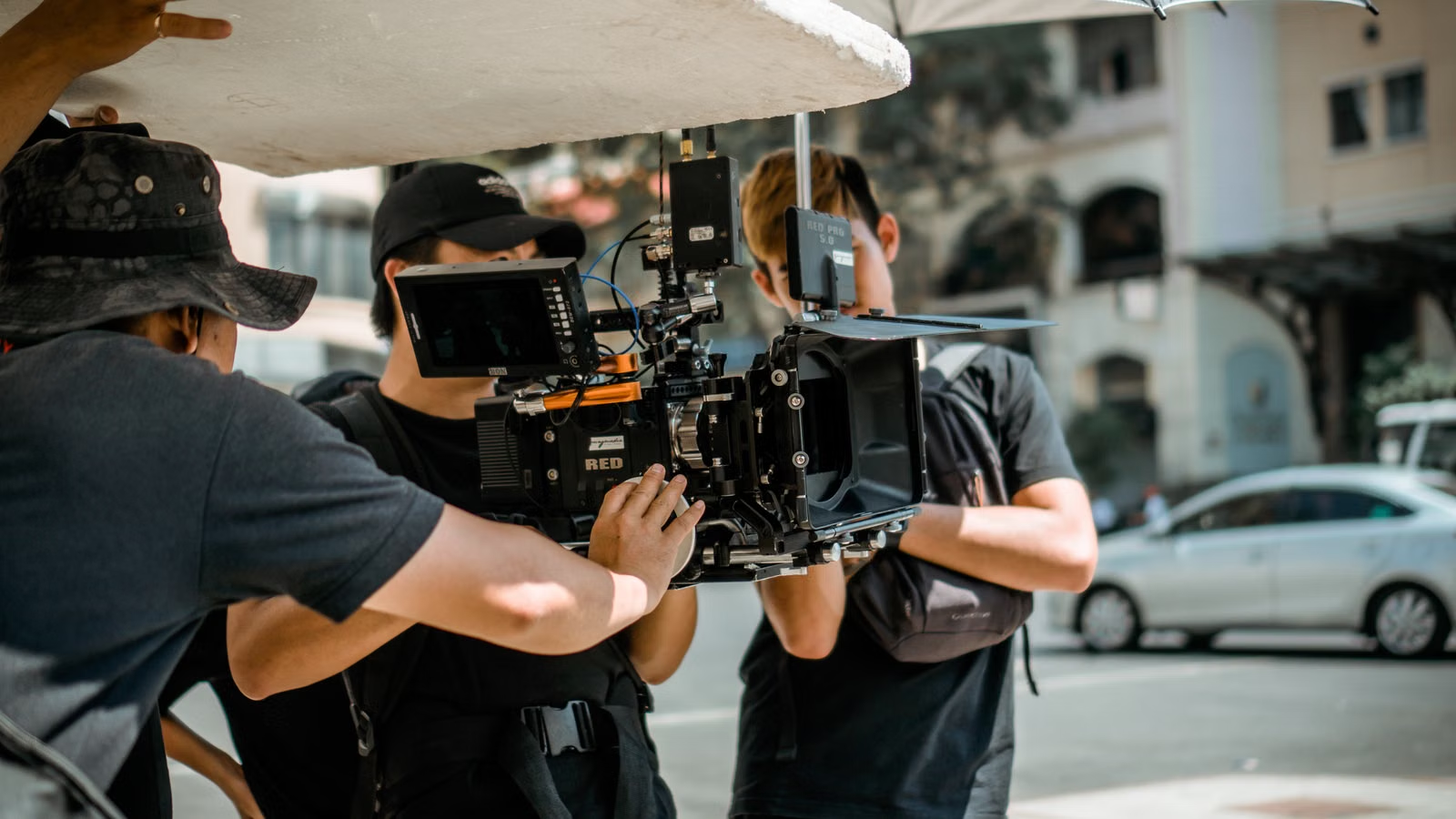
A 28-room guesthouse in Bukhara asked us for a video last spring. They had four hundred decent photographs, a booking page that converted under one percent, and three quotes from production companies between four and twelve thousand dollars. Every quote assumed a crew of six, a permit for the courtyard at sunrise, and a drone the operator was not licensed to fly. The season started in five weeks.
The useful question for a hotel, a tour operator or a destination board is not whether to make video. It is which shots can be produced without a crew, which ones cannot, and how to plan delivery so one production serves the website, the OTA listings, the social accounts and the sales deck in three languages. That is an operational question, and it has an answer before anyone renders a frame.
Every travel video is three layers
Place, people, motion. Place means architecture, courtyards, tiles, minarets, mountain roads and the light on them. Generative models handle place well at the level of texture, weather and atmosphere, and badly at the level of specific ornament. People means the guide, the receptionist, the chef, the guest at breakfast. Faces and speech still belong to a real camera or a deliberate decision to use a synthetic presenter. Motion is the walk from the gate to the desk, the tea being poured, the curtain opening onto the courtyard, and this is where generation gives the most return, because a four-second move across a courtyard costs nothing to re-generate and a great deal to re-shoot.
Split your shot list along those three lines before you budget anything. Most travel briefs we receive mix all three into one paragraph, and that is why they come back expensive.
Do not generate your own landmark
Registan, Ichan-Kala, Shah-i-Zinda, the Kalon minaret, the Chimgan road. Anyone who has stood in those courtyards will notice when the geometry slips: the tile pattern starts repeating, the proportions drift, the sky is too clean for July, the shadows point the wrong way for four in the afternoon in October. It reads as a place like this rather than this place, and for a destination that is a trust problem, especially in regional markets where a good part of the audience has actually been there.
The workable split is this: shoot real plates of the eight to twelve views that identify your property or your city, then use generation for the connective tissue. Extend a courtyard that is too small for the camera move you want. Clear a tour group out of the frame. Move harsh noon light to something usable. Add the season you did not shoot in. Three or four minutes of real footage, shot on a gimbal over one morning in the shoulder season, is enough raw material for a year of output when it is catalogued properly.
A shot list that survives the model
Write shots, not scenes. Three to five seconds each, one action per shot, one camera intention. Wide and medium frames forgive far more than close-ups of faces. Keep text out of frame: signage, menus and room numbers render as plausible nonsense, and viewers in your own city read it instantly. Avoid mirrors, still water and reflective marble lobbies, which double every imperfection. Avoid hands performing fine tasks, crowds of strangers, and children entirely.
A list that has worked for hospitality clients: gate opening onto a courtyard; key handed across a wooden desk; curtain drawn back to a window; tea poured into a piala with steam; a table set with bread and fruit; a wide of the room from the doorway; footsteps on a stone staircase; the exterior at the hour the lights come on. Eight shots, roughly thirty seconds of screen time, and every one of them can be generated from one or two real plates plus a reference frame of the actual property.
Light and season. Uzbek light is specific. July noon is forty degrees and hard, with dust hanging in the air. March brings apricot blossom and grey wind. October gives cotton, pomegranate and a low, clean sun. Generative models default to a temperate European golden hour that looks like a stock library and not like Tashkent. Give the model a reference frame from your own building with the real colour temperature, name the month, and lock the grade across every shot. Otherwise your four shots will look like four different countries.
Language and delivery: five markets, four crops
A destination sold in five markets needs five voice tracks and on-screen text in Russian, English, Uzbek Latin, Uzbek Cyrillic and whichever third language your source markets use. Decide before the shoot whether a presenter speaks to camera. If they do, lip-sync quality becomes a budget line, because a mouth that drifts by a few frames is the first thing a viewer notices. If narration sits over b-roll, dubbing plus subtitles is cheaper, more forgiving and easier to revise when a rate or an opening date changes. Both routes are legitimate; choosing late is what costs money.
Crops and cutdowns. One production should leave the building as a sixty-second film, a thirty, a fifteen, a six-second bumper, a sixteen-by-nine hero for the site and YouTube, a nine-by-sixteen cut for Reels and TikTok, and a square for marketplace placements. Plan text placement per crop, not once for all of them. A subtitle placed ten percent from the bottom sits under the interface on TikTok. A logo in the lower third disappears behind the caption block. Deliver the first frame as a deliberate thumbnail, because that frame decides whether the video is watched at all.
Timeline, budget and what still needs a camera
A thirty-second property film with three language versions and two crops is eight to twelve working days including two review rounds. Two or three generation passes per shot are normal, and that is not waste, it is the craft. The expensive part is rarely rendering; it is deciding. Approvals by committee add a week each.
Some things still need a real camera: a named guide speaking about their own city, a chef describing a dish, interiors where the brand upholstery must be exact, and any shot where a specific person must be recognisable. A synthetic presenter works for offers and explainers. It does not work for testimony.
Rights, releases and drone rules
Get a likeness release from anyone who appears, including a synthetic presenter built on a real person. Confirm music licensing for every platform you post to, because stock tracks and generated tracks are treated differently by content matching. Get written permission from the property owner to show interiors and any guest who is visible. Drone work near heritage sites, airports and state buildings in Uzbekistan needs permits and is often restricted outright, so do not promise aerial shots in a brief before that is checked. Finally, agree in writing who owns the raw plates, because they are the asset you will reuse next season.
Send one property, the room count, the markets you sell to, and the formats you actually need. We will come back with a shot list that marks each shot as camera or generated, a language plan and a delivery schedule, before anything is rendered. KAMOD is an AI video studio based in Tashkent, working with hotels, tour operators and brands worldwide.