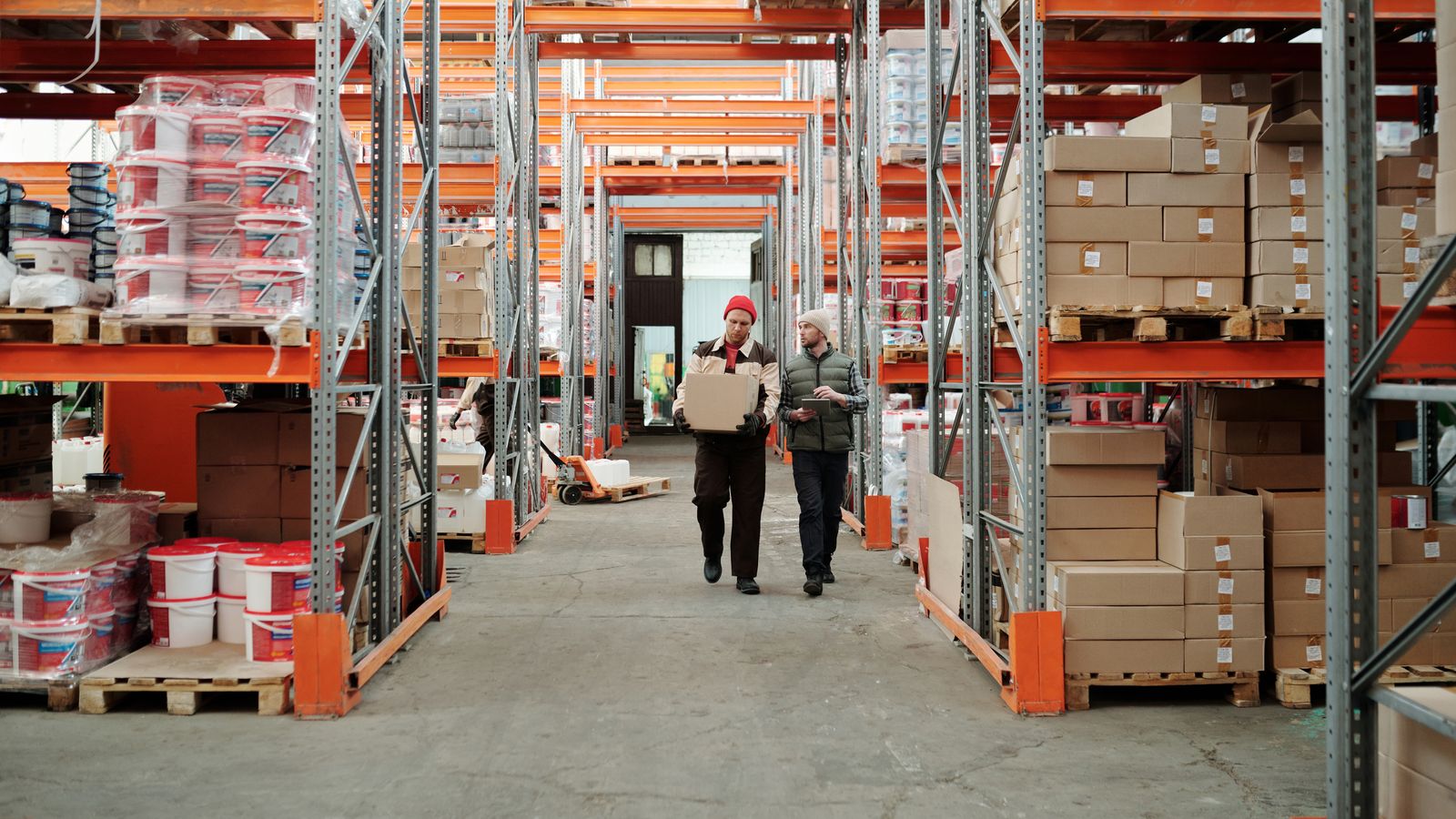
A distributor of household goods in Tashkent supplies 300 small shops. Most of his day is the same conversation on Telegram: how many units in a carton, what is the price per carton, is it on the floor today. He used to answer with photographs. Then he started sending a forty-second phone video: a pallet, a hand pulling one carton off the stack, the carton opened, the price written on the flap. His repeat orders went up, and not because the video was well made. It went up because the buyer could see the actual goods on the actual floor before deciding to spend two hours travelling to the warehouse.
That is the standard any wholesale video has to meet. A distributor does not need a brand film. He needs proof, repeated forty times a week, in a format a shopkeeper can watch while standing behind a counter. AI video can do that faster and cheaper than a camera crew, but only if you understand what the buyer is checking and where generated footage stops being evidence.
What the buyer is checking in the first fifteen seconds
A shopkeeper watching a product video is not being entertained. He is running a short checklist, in this order:
- Is this exactly the product I already sell, with the packaging I recognise?
- How many pieces are inside one carton, and how heavy is it?
- What is the price per carton, not per unit?
- Is it in stock now, and in which warehouse?
- Will a trip across town be wasted?
Every item on that list is a fact, not a mood. That is why the phone video of a real pallet beats a polished catalogue page: the catalogue answers the first question and leaves the other four to a phone call.
The practical consequence for production is that the video should be vertical, under forty seconds, readable at small size on a mid-range Android phone, and front-loaded. The carton and the price in the first three seconds. The warehouse and the terms after. No logo animation before the product, no music intro. If a buyer cannot see the carton in the first frame, he scrolls, and the video has cost you money for nothing.
Three formats that earn their place
Most distributors only need three shapes of video, and they can share one look:
The single-SKU spot. Ten to fifteen seconds. One product, one carton count, one price, one phone number. This is the workhorse: it gets forwarded into shopkeepers' groups, saved, and re-sent. Produce it once per SKU and update the price band when the price changes.
The arrival announcement. Twenty to thirty seconds. A new container or truck has landed, here is what came, here is when it is available and at what terms. This one benefits from real footage of the loading bay, because the announcement is about a physical event that just happened.
The ordering explainer. Sixty to ninety seconds, produced once and reused for a year. Minimum order, delivery zones, payment terms, how to place an order on Telegram. This is the video that saves your sales staff the most time, because it answers the questions they answer on the phone every morning.
Where generated footage stops being evidence
This is the part that decides whether AI video helps or hurts a distributor.
Anything that functions as proof should be real: the pallet count, the damaged carton, the actual depth of the warehouse, the truck at the ramp. If a video implies there are 1,200 cartons on the floor, a buyer may drive over to check. He will find out. A generated warehouse that does not exist is not a marketing shortcut, it is a credibility loss with a very short half-life.
Where generation earns its money is everywhere else: the clean product plate, the abstract warehouse aisle used as a background, the price and terms band, the localised voiceover, the version in a second language, the seasonal restyle. Those are production costs, not claims about inventory. Keep the two categories separate in your own brief and the video stays honest.
There is one more trade-off worth naming. AI models invent packaging art. If your carton is blue with a red stripe and a specific mark, a generated label will look almost right, and almost right is worse than absent, because a shopkeeper will ask whether you have changed the packaging. The fix is unglamorous: photograph the real carton from six angles, treat the label as a photographed element, and let the model move the environment around it rather than the product. That adds roughly a fifth to the cost per SKU and removes the entire category of rework where a buyer says this is not our box.
Language, numbers and accents
Wholesale trade in Uzbekistan runs on two languages at once. Accounts and contracts tend to be in Russian. Small shopkeepers in bazaars and regional markets often prefer Uzbek, and in mixed conversations both appear in the same sentence. Producing two versions is not duplication for its own sake; it is the difference between a video that gets forwarded and one that gets ignored.
Two practical rules from our own production. First, do not stack two subtitle languages in one vertical frame. At 720 pixels wide on a cheap phone, two subtitle tracks are unreadable and make the price look like small print. Second, numbers must be spoken slowly and shown on screen at the same time: pieces per carton, price per carton, minimum order. Those three numbers are the whole commercial message, and a voiceover that rushes them wastes the video.
Accent is a real decision, not a detail. Neutral Tashkent Uzbek travels well across regions. A strong regional accent can be an asset for a regional distributor who wants to sound local, and a liability for one selling into a different region. Decide per market rather than picking one voice for the whole country.
Cost and turnaround at forty SKUs
The economics change completely depending on whether you order films or a template.
Ordering forty SKUs as forty separate films is forty productions: forty concepts, forty scripts, forty edits. The first one takes three to five working days; the fortieth takes as long as the first because nothing is shared.
Ordering a template is different. You approve one master: a product plate of six to eight seconds, a fixed price band position, one voiceover script with slots for the numbers, one end card with the phone number and Telegram handle. After that, each variant is a swap: new product photograph, new numbers, same structure. Variants land in one to two working days, and the cost per video falls sharply because you are paying for a swap, not a production.
The reusable assets are the environment plates: a warehouse aisle, a loading bay, a hand opening a carton, a stack being wrapped. Shoot or generate those once, keep them in a library, and reuse them across a year of product updates. Only the product plate and the price change. This is also why a distributor who publishes weekly ends up paying less per video than one who commissions a single film every quarter.
What the studio needs from you on day one. The brief that works is short and boring:
- Photographs of each carton, front, side, top, and a close-up of the label
- The SKU list with pieces per carton, carton weight, price per carton, and price per pallet if you sell pallets
- Minimum order and delivery zones
- The phone number and Telegram handle that must appear on the end card
- Thirty seconds of phone footage of the actual warehouse, however rough
- Which languages you sell in, and which customers get which version
That is maybe ten minutes of work, and it removes a week of back-and-forth. Anything you cannot supply, say so in the brief. A studio that knows the label photograph is missing will design around it; a studio that finds out after delivery will have generated the wrong box.
Questions distributors ask before they start
Can AI video show our actual product and packaging? Yes, if you supply photographs. We treat the real carton as a photographed plate and generate the environment around it. What we will not do is invent packaging for a product we have never seen, because the first buyer who notices will stop trusting the rest of the video.
How long does the first video take? Three to five working days for the master, including one revision round. After the template is approved, variants take one to two working days each, and we can deliver a batch of ten to fifteen in a week.
Do we have to film anything ourselves? About ten minutes of phone footage of the warehouse, the pallet and the carton on a table. It does not need to be good. It needs to be accurate, because it is the reference that keeps the generated scenes honest.
Which language should the voiceover be in? Uzbek for shopkeepers and retail-level buyers, Russian for accounts and wholesale contracts, and often both. Two files, not two subtitle tracks in one frame. Test one SKU in each before committing to a full catalogue.
Can we change prices without paying for a new video? Yes, and you should insist on it. The price sits on a separate text band, so a price change is a re-render of that band, not a new production. If a studio quotes you a full production fee for every price update, the template was built wrong.
If you sell by the carton and your buyers decide on a phone, a small library of template-based product videos will do more for repeat orders than any single brand film. KAMOD is an AI video studio in Tashkent working with distributors and brands worldwide. Send us your SKU list and a photograph of one carton, and we will come back with a template structure and a cost per variant before you commit to anything.