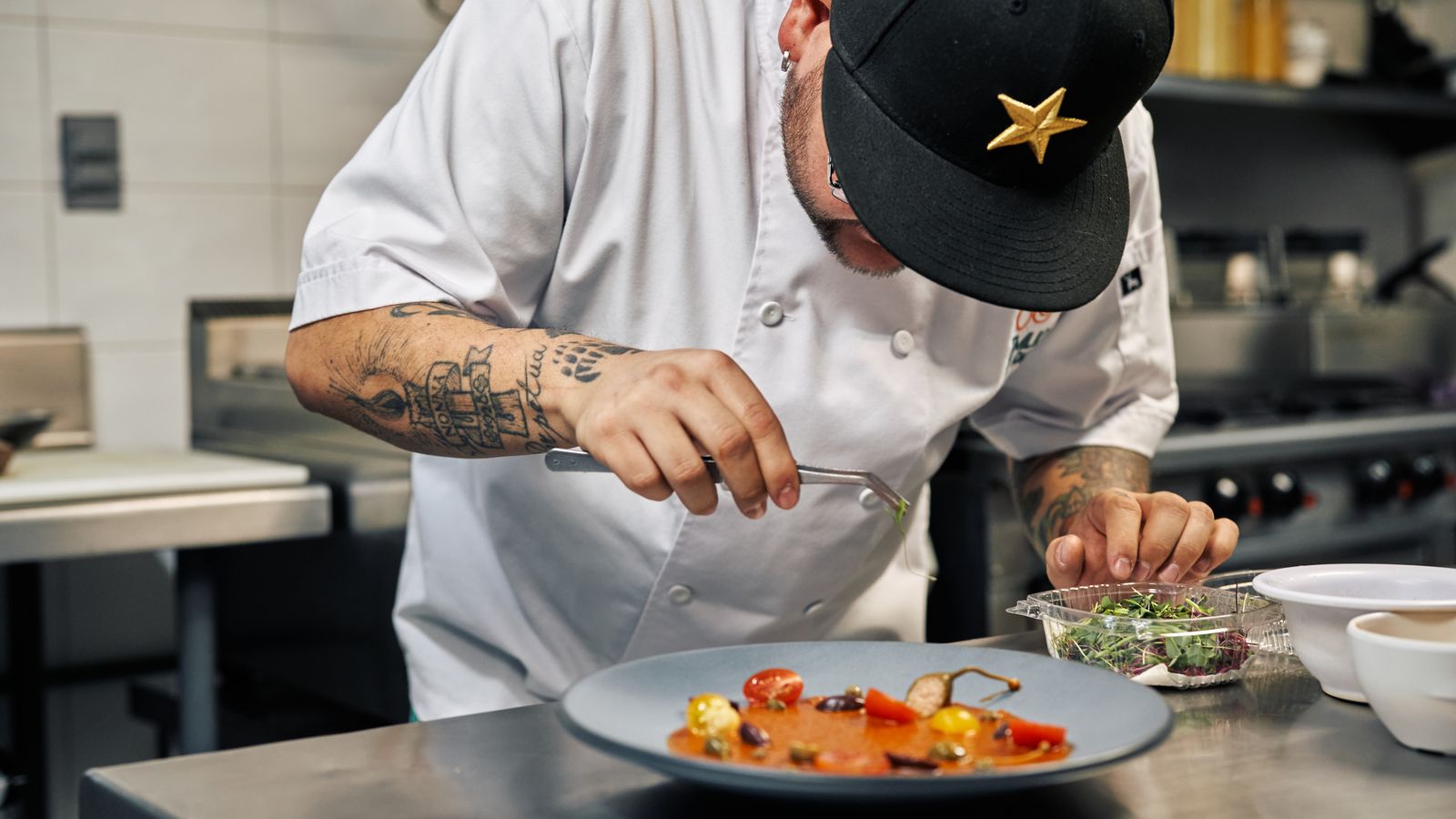
A restaurant books a video shoot. Two days, a photographer, a food stylist, a bag of groceries cooked and thrown away, and six weeks later the seasonal menu changes — and half the footage is now wrong. The clip that took the longest to approve is the one nobody watches, because the dish it shows left the menu in April.
That is the real problem with restaurant video, and it is not a creative problem. It is a maintenance problem. Menus change four times a year, prices change twice, a dish gets a new plating, a new chef arrives. Any video asset that cannot be updated in an afternoon becomes a liability the moment it is published.
This is where AI production changes the arithmetic for restaurants and hospitality venues, and where it does not. The honest answer sits in the middle, and it starts with knowing what each clip is actually for.
The three places the video will be watched
Most restaurant video fails because one edit is asked to do three jobs. They are not the same job, and they do not share a format.
The delivery app card. Silent, autoplaying, cropped to a square or vertical thumbnail, watched for under two seconds by a person deciding between four restaurants. No sound, no captions, no patience. The first frame must contain the food, in focus, filling most of the rectangle. A clip that opens on your logo or your facade loses to the restaurant next to it.
The social feed. Vertical, sound on, judged in the first half second. Here motion is the whole point — the pour, the pull, the slice. This is also the only place where a human face and a voice help, because the feed is social and a plate alone is not.
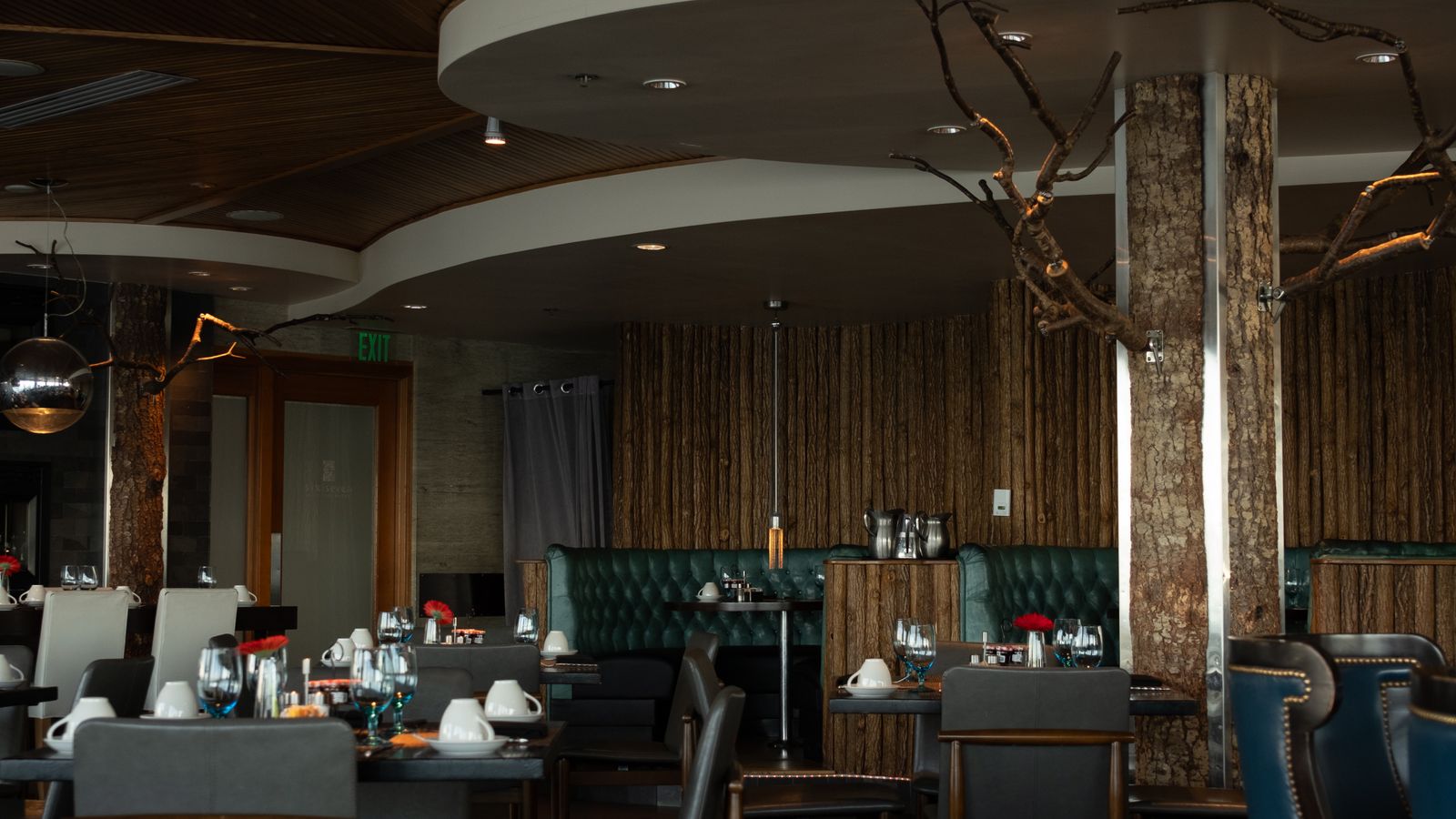
The in-room screen or menu board. Horizontal, no sound, watched for a long time from a distance, in a loop. Detail shots read badly here; wide food-and-room shots read well, and any text on screen must be legible from four metres.
One dish therefore produces three deliverables: a three-second square, a six-to-eight-second vertical, and a ten-second horizontal loop. A production pipeline that generates one master clip and crops it three ways is fine. A pipeline that produces three unrelated clips is a budget leak.
Which dishes survive a camera
Every dish needs at least one motion event and one texture event. If it has neither, it does not deserve a dedicated clip — shoot it inside a table spread instead.
Motion events are the obvious ones: sauce poured over a steak, cheese pulled from a pizza, a knife through a crust, beer hitting the side of a glass, noodles lifted from a bowl, a spoon cracking a caramel surface. These read instantly, at any size, on any phone.
Textures that hold up: char and grill marks, glossy glaze, crumb structure, the grain of a steak's cut face, the sheen on a fresh bun, oil beading on a hot surface.
Textures that die on camera: pale cream soups, white rice, mashed potato, dumplings without steam, anything beige on a beige plate. They do not look unappetising in the room — they just photograph as flat shapes with no information in them. The fix is never more lighting. The fix is a different angle, a darker plate, or a garnish that adds colour contrast.
Two physical rules that most phone shoots break. Hot food needs visible steam, or the brain reads it as cold and old. Cold drinks need condensation, or they read as warm. Steam and beading are exactly the details AI generation handles well, which is why generated inserts sit naturally beside real plates.
The six-shot sequence
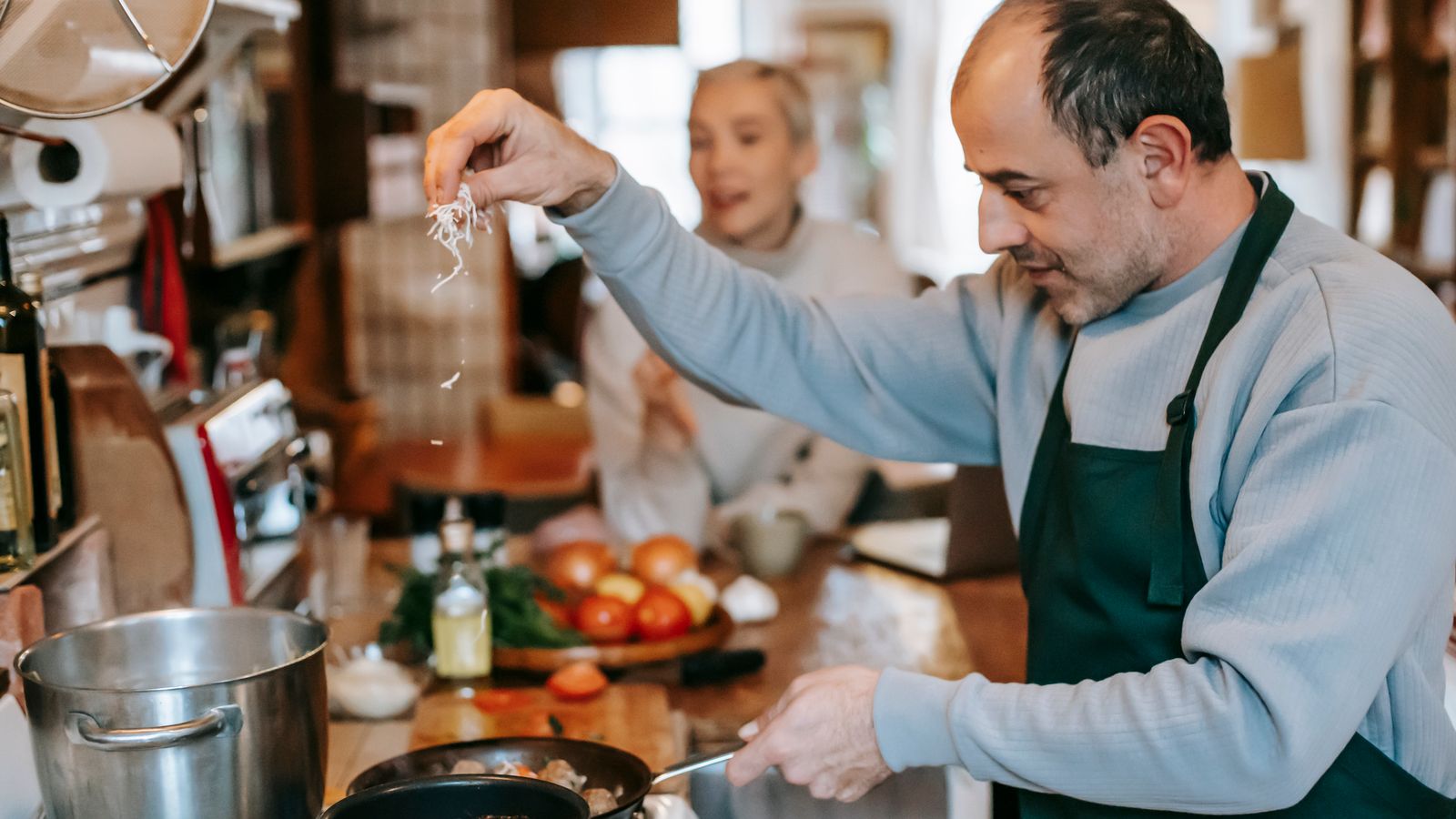
A single dish reads best as six shots, about six seconds total:
- Wide context, table and room, roughly 0.8 seconds
- Hands placing the plate down, 1 second
- Top-down macro of the surface texture, 1.2 seconds
- The motion event — pour, pull, slice, steam, 1.5 seconds
- Detail: garnish, sauce pool, crust edge, 0.8 seconds
- Exit: a fork lifting, or a hand reaching in, 1 second
For the delivery listing, cut the same material to three shots and 2.5 seconds, no motion events longer than half a second, and start on the tightest, brightest frame. For the in-room loop, drop the hands and keep the wide and the detail, then slow it down.
This sequence is the reason a shot list matters more than a script. Nobody at the table cares about your story; they care whether the food looks like something they want to eat in the next ten minutes. Six shots per dish, twenty dishes, is a library — and a library can be reused, recombined and localised for a year.
What AI production does well, and where it fails
It does well at the parts that are expensive to repeat. Generating a beauty insert from one honest photo of the real dish. Building texture loops for a menu board. Creating room atmosphere around a real interior shot. producing steam, pours and condensation that match the plate. Re-rendering a clip in twenty minutes when the plating changes, instead of rebooking a crew for twenty days. Producing three language versions of the same presenter line without a second studio day.
It fails at four specific things, and every restaurant should know them before signing anything.
Hands with cutlery are still the weakest link. Extra fingers, a fork held wrong, a knife that bends. Keep real hands in the frame for anything where a hand is the subject, and use generated frames only where the hand is a background blur.
Text is unreliable. Signage, a menu card, a chalkboard, a branded napkin — generated lettering turns into decorative nonsense. If text must appear, it should be added in the edit, not generated.
Your room is not reproducible. A generated interior will be beautiful, generic and not yours. Guests who arrive expecting the generated room are disappointed by the real one. Use real photographs of the real space and generate only the atmosphere around them.
Portion honesty. This is the serious one. A model will happily make the plate look fuller, glossier and more generous than what leaves the kitchen. In a delivery listing that is a refund, a complaint and a one-star review about portion size. The fix is a hard rule: generated plates must be built from a photograph of the actual portion, and the food must never be enlarged or "improved" beyond what the kitchen serves.
The reference photo is the whole project
Every generated shot is only as good as its reference. One photograph per dish, taken on a phone, in daylight, near a window, no flash, plate filling about seventy percent of the frame, one dish per frame, no hands, one top-down and one at forty-five degrees.
An afternoon is enough. Shoot before service, twenty dishes in ninety minutes, keep the names in a simple list matched to filenames. This step is boring and it decides the quality of everything downstream. A waxy, over-lit, flash-blown reference produces waxy, over-lit, plastic food, no matter which model renders it.
Localisation is now part of the menu
A restaurant in Tashkent serves Russian-speaking, Uzbek-speaking and English-speaking guests in the same room, and often advertises to all three. Re-shooting for each language is out of the question; re-recording a voice track is not.
Once a clip exists with a presenter or voiceover, translating it is a per-minute cost, not a production day. The same applies to on-screen text plates: build the edit so the text layer is separate, then swap it. Restaurants that do this well run one master film and three localised cuts, and they stop treating the Russian feed as a translation of the Uzbek one.
Cost and turnaround, stated plainly
A twenty-dish library, produced as described, takes roughly three to five working days end to end: one afternoon of reference photography, one day of generation and selection, one day of editing into three formats, one day of review and one day of buffer for the dishes that render badly.
A seasonal refresh — new dishes, changed plating, updated prices on the text cards — takes hours, not weeks, once the reference library exists.
The trade-off is real and worth naming. A food stylist, a good lens and a real shoot buy authenticity and craft that generation cannot reproduce: the actual weight of a plate, the true colour of your sauce, the exact way your chef's hands move. AI buys frequency and menu agility at a fraction of the cost per clip. The setup that works for most restaurants is one proper reference shoot per season, plus generated inserts, variants and localisations for everything in between.
A thirty-day rollout
Week one: reference shoot, twelve best-selling dishes, daylight, one afternoon. Week two: vertical feed edits for the six dishes with the strongest motion events. Week three: square delivery cards for all twelve, cut to 2.5 seconds, first frame tested on a phone at arm's length. Week four: horizontal in-room loop and a simple measurement — do delivery orders for those twelve dishes move, and does the average order value change.
Measure before and after. Restaurant video has a bad habit of being commissioned, admired and never checked against a number.
Where to start
KAMOD is an AI video studio based in Tashkent, working with restaurants, hotels and food brands worldwide. The fastest way to start is not a brief — it is three phone photos of three dishes you actually sell, taken near a window. From those, a shot plan and a price come back within a day, and the first vertical cut within a week.
Send the three photos and the name of the dish you are proudest of. That is usually the one that sells.