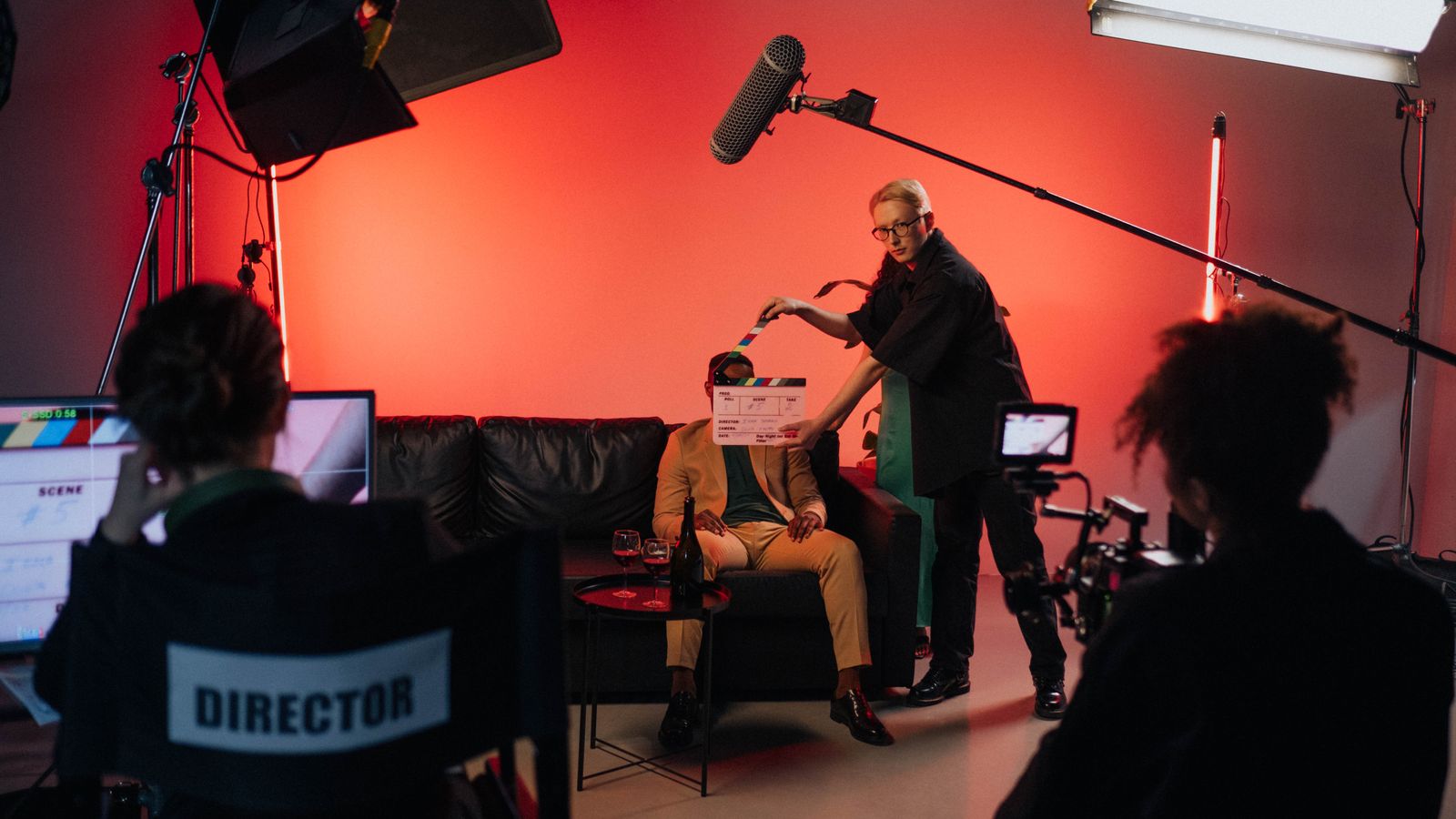
Every studio I know has the same argument in the second week of February. Marketing wants the Navruz film live by 10 March. Someone remembers that last year the same brief arrived on 1 March, the edit was rushed, and the version for the Hayit sale never got made at all. This year the team promises to start early. Nobody writes down what "early" means, so it happens again.
Seasonal work is not harder creative work. It is the same creative work compressed into a window that does not move, in a year where you have four or five of those windows and each one competes with the others for the same people, the same review cycles and the same rendering hours. Most of the pain in seasonal AI video production comes from scheduling and versioning, not from generation quality. This is how we plan it with clients so the last week before a holiday is boring.
The calendar decides more than the creative
A campaign that airs on a fixed date has one fixed property: the date. Everything else is negotiable. So the useful planning question is never "when do we start?" but "what has to be locked, and by when, for the date to hold?"
In practice four things get locked, in this order: the offer, the campaign length and placements, the language set, and the visual concept. Each one has a different cost of being late.
If the offer changes late, only the end card and the voiceover change, and that is cheap. If the placement list changes late, every aspect ratio has to be re-cut and re-checked, which is expensive. If the language set changes late, you are re-running lip-sync and re-recording voice, which is the most expensive late change of all. And if the concept changes in the last ten days, the campaign is not late, it is cancelled.
The practical rule we give clients: lock the offer and the concept eight weeks out, the language set six weeks out, the placement list four weeks out. Anything after that is a revision, not a decision.
Lead times that actually hold
These are the ranges we quote for AI production, and they assume the client reviews within two working days. Add a week for every review cycle that takes longer than that.
- Single 15-second spot, one language, three ratios: 8 to 10 working days from approved script.
- Three-spot campaign with a shared world and shared cast: 18 to 22 working days.
- Campaign plus localisation into Uzbek, Russian and English: add 6 to 8 working days, mostly for lip-sync review and voice casting.
- Product-led retail campaign needing exact packshots and price end cards: add a week, because every frame with the product has to be checked against the real packaging.
The number that surprises people is the localisation add-on. It is not translation time. It is the review time, because a translated line that is two syllables longer than the original changes how the mouth has to move, and someone has to watch all versions side by side and decide whether the compromise is acceptable.
Build one world, cut it many ways
The single biggest saving in seasonal work is designing the campaign so that versions are cuts, not new productions. That means deciding the version matrix before anything is generated.
A typical matrix for a Tashkent retail client looks like this: two languages, three placements, four offer variants. That is twenty-four deliverables from one shoot. If each one were treated as a separate job, the cost would be absurd and the brand would look inconsistent across channels. Treated as a matrix, it is one production with a disciplined export pass.
Three things make the matrix work:
First, keep the product and the price out of the generated footage. Put them in end cards and lower thirds that are composited afterwards. Then a price change costs an afternoon, not a regeneration.
Second, shoot the hero shot at the widest ratio you will need and crop inward. Nine-by-sixteen is the tightest crop, so compose for it and protect the edges for sixteen-by-nine.
Third, write copy that survives shortening. A line that needs all seven words to make sense cannot be cut to four for a bumper. Write the four-word version first and let the long version be the luxury.
Navruz and Hayit are not interchangeable
Both are spring holidays in this market, both are family occasions, and clients routinely ask for "the same film, adapted". That is usually the wrong request, and saying so early saves a wasted month.
Navruz reads as renewal, food, tables, outdoors, generosity, the colour green, and a tone that is warm and communal. Hayit reads as gratitude, visiting, giving, restraint, and a tone that is quieter and more respectful. A film built on Navruz's visual language does not adapt to Hayit by swapping the date card. The pacing, the music, the amount of movement in frame and the way people are dressed all shift.
We ask clients to pick one holiday per year for the big production and treat the other as a shorter, cheaper presence built from stills, typography and a single generated scene. Trying to give every holiday a full film leads to five mediocre pieces instead of one that people remember.
The same logic applies to New Year, back-to-school and the late-November sale week. They are different audiences in different moods, and the calendar collision between them is the real constraint.
Book capacity before the rush
AI production is less constrained by crew than by compute and by reviewer attention. In the four weeks before a major holiday, every studio in the region is rendering at once, and the queue is real.
We reserve seasonal slots six to eight weeks ahead and hold them with a small deposit. Clients who arrive three weeks out get whatever is left, which usually means a smaller scene count, fewer iterations and a shorter approval window. That is not a sales tactic, it is arithmetic: a forty-shot film with three review rounds and two language versions needs roughly sixty to eighty generation passes, and those passes take hours each.
There is also a human bottleneck. The person who reviews lip-sync in Uzbek is the same person in February as in March, and they can only watch so many versions per day before they stop catching errors.
What to measure, and what to ignore
Seasonal campaigns are judged on a short window, which makes people reach for the wrong numbers. Views in the first 48 hours mostly measure how much you paid to distribute. What is worth tracking is:
- Three-second hold rate by placement, because a film that fails at two seconds is a delivery problem you can fix next time.
- Completion rate on the tightest crop, since vertical is usually where the money is.
- Cost per delivered asset, which is the number that tells you whether the version matrix was designed well.
- Whether the offer was understood, measured with a one-question survey or a comment audit rather than inferred from clicks.
What we ignore: likes as a quality signal, and any comparison between a holiday film and a non-holiday film. They are not the same test.
Working backwards from the air date
A workable plan for a campaign with three spots, two languages and four placements, airing on the first of the month:
Week minus eight: brief approved, offer locked, concept chosen, budget signed. Week minus seven: script and shot list locked, voice casting done. Week minus six: look development, three key frames approved, cast references locked for consistency. Week minus five: generation of hero shots, first assembly. Week minus four: first review, changes agreed in writing. Week minus three: second assembly, localisation pass begins. Week minus two: lip-sync and voice review in both languages, end cards built. Week minus one: final approval, exports for every placement, delivery folder handed over. Week zero: air. Nobody works the weekend.
If your studio cannot show you a plan shaped like this, with dates attached, the risk is not that the film will be bad. The risk is that it will be late, and late seasonal work is worth nothing.
KAMOD is an AI video studio in Tashkent working with brands across Central Asia and beyond. If you have a holiday or a sale date on the calendar, send us the date and the offer first, and we will tell you honestly what is achievable and what has to wait for next year.