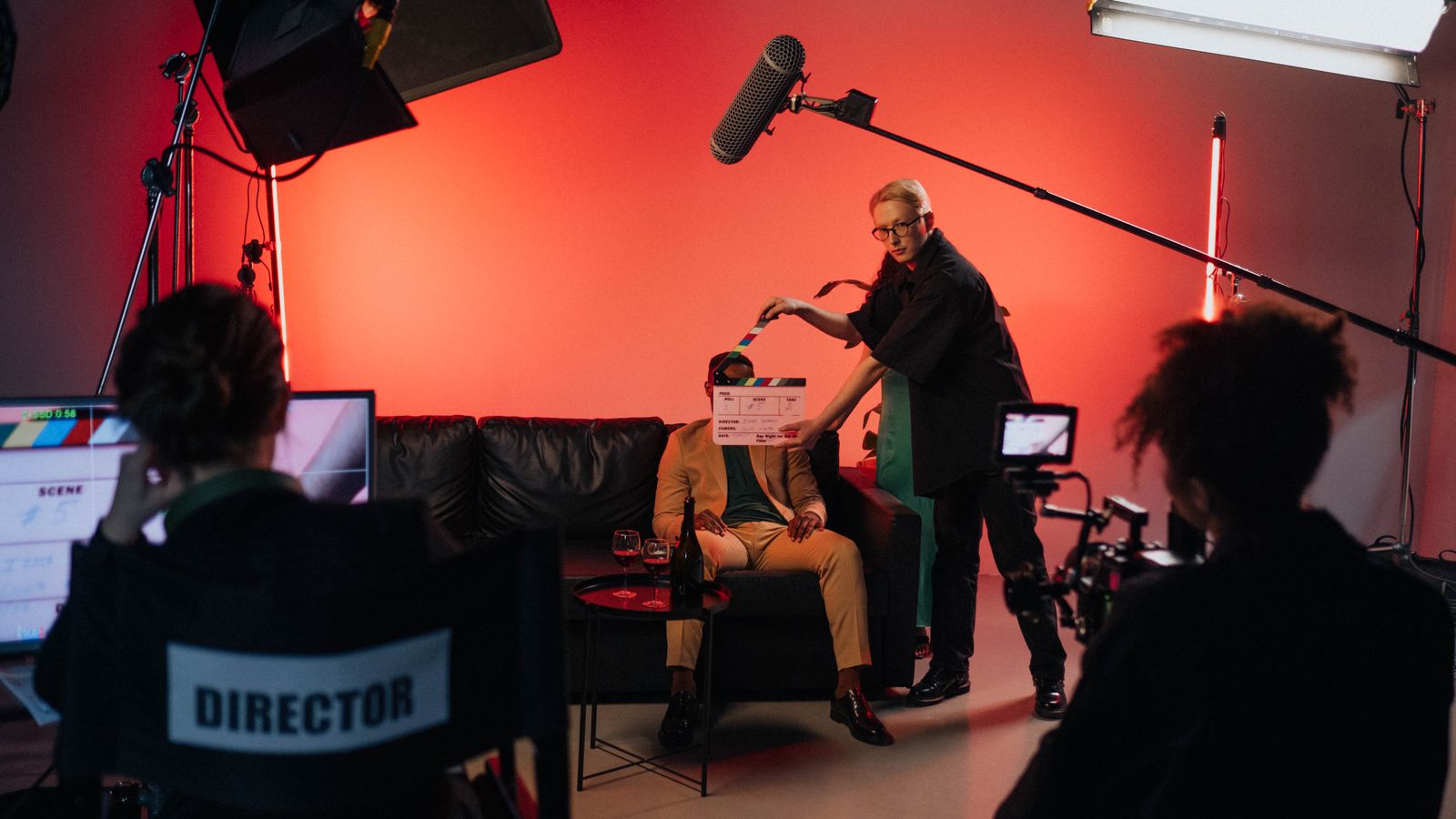
A studio sends a showreel, a rate card and a delivery date. Three weeks later the client is watching a cut that shares nothing with the reel except the logo at the end, a hero whose jaw changes shape between two consecutive shots, and an invoice with "render hours" that were never in the quote.
Almost every failed AI video project we hear about in Tashkent and abroad breaks at the same point: the questions were never asked before the contract, and after the first draft it is too late. Below is the set of questions we think any client should put to an AI video studio, ours included. They are the same questions we answer on our own kickoff calls, and a client is better off hearing the answers before the money moves rather than after.
Ask what the studio generates and what it shoots
"AI video" today means three different things: fully generated footage, a hybrid (a phone or camera shoot plus generated backgrounds and inserts), and conventional editing with AI tools layered on top. Ask plainly what percentage of the final running time will be generated, and how much will be shot or pulled from a licensed library.
This is not a formality. Full generation buys freedom in locations and casting, but it handles fine hand movement, dense on-screen text and long continuous dialogue badly. A hybrid is cheaper and more reliable for a product that physically exists, but it requires a shoot day. A studio that cannot answer this question in numbers has not yet understood its own process.
Ask for the model and the version, not for "AI"
"We use AI" is not an answer. Models differ in camera movement, face stability, on-screen text and maximum clip length. Kling, Seedance, Veo and MiniMax produce different results on the same brief, and the version matters more than the brand: an update changes behaviour more than a switch of vendor does.
A good answer sounds like: "hero shots on this model at this version, inserts on another one, because the first one handles fabric badly." A weak answer is a single service name with no version and no reasoning. If a studio can name its model but cannot say where that model is weak, it is selling you enthusiasm.
Ask how many generations one second of finished footage costs
This is the money question, and it is almost never asked. Generation is a lottery with predictable statistics: a five-second shot of a person in motion usually takes three to six attempts, and a shot with text or a reflection takes more. So "10 seconds of video" in a quote is not ten seconds of model time, it is sixty to a hundred seconds of generation that somebody pays for.
Ask whether that multiplier is built into the price, who pays for rejected takes, and what counts as a rejected take. A studio that prices only the final seconds is either hiding the risk in a margin or will discover it mid-project, when changing the price has become awkward for everyone.
Ask who owns the output and what the licence covers
Three separate rights get conflated constantly: the right to use the video, the right to the likeness of a person in frame, and the right to the voice. A generated character does not exist, but if it resembles a real person and there is no release, that is the client's exposure, not the studio's. If the voiceover is synthetic, ask for how long and for which channels it is licensed.
Then ask whether the studio hands over working files: project files, clean plates without graphics, audio stems, the ungraded master. Marketplaces such as Uzum, Wildberries or Ozon often require a re-cut to a different aspect ratio a month later, and without source material that re-cut is priced as a new project.
Ask how revisions are counted
"Two rounds included" can mean anything. Clarify whether a revision is a change inside an approved shot or a replacement of the whole shot. A new camera angle, a different line of dialogue, different lighting — those are usually new generations, not revisions. A good studio draws that line on paper before the start, because otherwise an argument is guaranteed.
A practical reference point: two rounds at storyboard stage, two at rough cut, then an hourly rate. Revisions at the final grade stage should be technical only — colour, loudness, titles. If a studio promises unlimited revisions, ask how many projects a month it closes that way; the answer usually explains why its schedules drift.
Ask what happens when the model fails
Sooner or later a specific face, a logo, or the wording on packaging will generate badly. This is a normal part of production, and professionals know what closes those gaps: replacing the shot with real footage, compositing in a conventional editor, switching models for that one shot, reframing.
Ask in advance what the plan B is and whether it is inside the quote. "We will generate all of it" is the only honest red flag on this list.
The cheapest way to evaluate a studio, before a retainer is signed, is a single short paid test: five to eight seconds, your product or your character, a standard brief. You will not see a showreel, you will see the actual process — how many questions they ask, how long the first shot takes, how communication works when something is rejected.
At KAMOD we work from Tashkent with clients worldwide, and on a first call we answer every question above before we discuss price. If you want a second opinion on a brief or on another studio's quote, send it over and we will read it with no obligation.